Christian memes can make believers laugh, but they can also lead us to think seriously about faith, Scripture, and the way we live before God. In a digital culture where so much content is made only for attention, reflections like “Is your worship for God or for social media?” remind us that even online Christian content should be handled with reverence, wisdom, and sincerity.
When hearing the term “Christian meme”, many Christians immediately assume that it refers to mockery, irreverence, or disrespect toward the Lord. This reaction is understandable, especially in a digital culture where humor is often used carelessly, where sacred things are sometimes treated lightly, and where people can confuse laughter with mockery.
However, this perception is not always accurate. Not every meme is created with malicious intent. Within the Christian context, there are memes that invite reflection, teach biblical truths, expose common contradictions, and even allow us to laugh in a healthy and respectful way. Humor, when used wisely, can be a powerful tool to communicate truth.
Can Christian memes be useful?
The answer is yes, as long as they are handled with reverence and discernment. A Christian meme should never mock God, trivialize Scripture, dishonor Christ, or turn holy things into entertainment. But a meme can use humor to reveal something true about human weakness, spiritual laziness, hypocrisy, fear, pride, or the daily struggles of Christian life.
In that sense, humor becomes a mirror rather than a weapon. It helps us see ourselves more clearly. Sometimes a simple image with a short phrase can expose an attitude we would rather ignore. A meme can remind us that we quote verses easily but obey them slowly, that we ask God to speak while neglecting the Bible, or that we pretend to hide from God when He sees all things.
Of course, Christians must be careful. Not everything labeled “Christian humor” is helpful. Some jokes cross the line into irreverence. Others make light of sin. Others use biblical language without respect. This is why discernment is necessary. The question is not only whether something is funny, but whether it is true, helpful, respectful, and spiritually edifying.
Below we share 7 Christian memes that manage to balance humor, learning, and reflection without crossing the line into irreverence. Each one uses a familiar situation to point toward a biblical truth that believers should consider seriously.
7 Christian memes to laugh, learn, and reflect
1 – I can do all things through Christ who strengthens me

This meme humorously exposes a common misuse of Scripture. Many Christians quote the verse “I can do all things through Christ who strengthens me” as a slogan for personal success, motivation, or self-confidence, often detached from its original context. While the verse truly speaks of Christ’s sustaining power, it is frequently used in a selective way, especially when it aligns with personal convenience.
The humor comes from the contrast between bold declarations of faith and the moments when commitment becomes uncomfortable. It is easy to quote this verse when we are pursuing a dream, starting a project, or seeking encouragement. But what happens when obedience requires patience, sacrifice, humility, service, or perseverance?
Rather than mocking Scripture, the meme invites reflection on how believers apply biblical truths. Genuine faith is not only verbal; it is practical. True dependence on Christ is revealed not only in easy moments, but also when circumstances challenge our comfort.
This reminds us that Bible verses should not be used as motivational slogans disconnected from their meaning. Scripture must be understood faithfully. When we use verses correctly, they strengthen the soul. When we use them carelessly, we may turn deep biblical truth into shallow personal optimism.
2 – Be imitators of me, just as I am of Christ
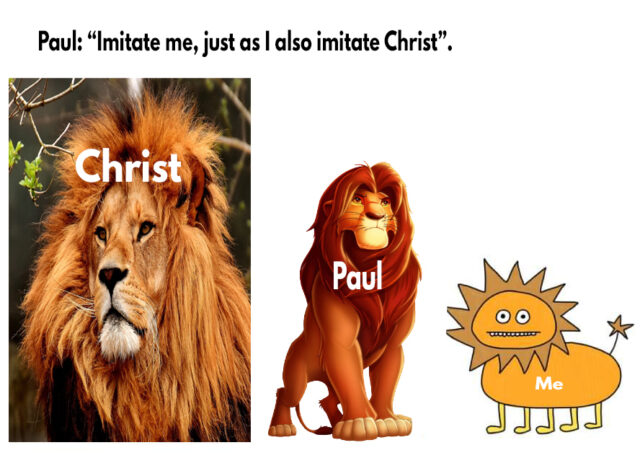
This meme touches on the tension between Christian ideals and human imperfection. The apostle Paul’s exhortation to imitate Christ sets a high standard that believers strive toward daily. As sinners saved by grace, we fall short in many ways, yet the goal remains clear: we are called to grow in Christlikeness.
The humor here lies in acknowledging our flaws while still affirming the seriousness of the calling. We know that we should reflect the character of Christ, yet we also know how often impatience, pride, fear, and selfishness appear in our lives. The meme works because every honest believer recognizes this struggle.
Rather than promoting hypocrisy, the meme encourages humility. It reminds us that imitation of Christ is a lifelong process marked by correction, repentance, growth, and dependence on grace. The Christian life is not about pretending to be perfect, but about following the perfect Savior.
This is an important lesson in a time when many people want to appear spiritually strong online. The Christian should care more about true transformation than public image. It is better to be humbly growing before God than to look mature before people while neglecting the heart.
3 – My life before I met Christ

This meme hardly requires explanation, yet it powerfully communicates the doctrine of transformation. Conversion is not merely a change of habits, preferences, or religious vocabulary. It is a fundamental renewal of identity. When a person comes to Christ, the old life characterized by disorder, sin, rebellion, and self-rule begins to be replaced by a new direction shaped by grace and obedience.
The humor lies in exaggeration, but the truth remains biblical: salvation produces real change. A believer is not instantly perfected, but he is genuinely renewed. The Christian still struggles with sin, but he no longer belongs to sin as master. He has been brought from darkness to light, from death to life, from slavery to freedom in Christ.
This meme reminds us of the contrast between who we were and who we are becoming in Christ. That contrast should produce gratitude, not pride. We do not boast as though we changed ourselves. We give glory to God because His grace rescued and transformed us.
It is also a reminder that Christian testimony matters. Every believer has a “before” and “after,” even if the change did not appear dramatic outwardly. Some were rescued from visible sins. Others were rescued from hidden pride, self-righteousness, unbelief, or spiritual indifference. In every case, salvation is a miracle of grace.
Humor can reveal serious truths
One of the reasons Christian memes can be useful is that they communicate quickly. A person may scroll past a long article, but pause for a meme. That small pause can become an opportunity for reflection. A simple image can raise a question, expose an inconsistency, or remind someone of a Bible truth.
This does not mean memes should replace teaching, preaching, Bible study, or discipleship. They cannot carry the full weight of doctrine. But they can serve as small reminders. They can point people toward deeper study. They can make someone say, “That is true; I need to think about this.”
The same principle applies to other digital tools. Technology can distract us, but it can also be used wisely. Just as the audio Bible has helped many people hear the Word of God, online Christian content can become useful when it leads people toward truth instead of vanity.
The key is purpose. Are we using humor to honor God, encourage believers, and communicate truth? Or are we using Christian language merely to gain attention? This question matters because the internet can easily turn even spiritual content into a performance.
4 – This is how you look when you try to hide from God
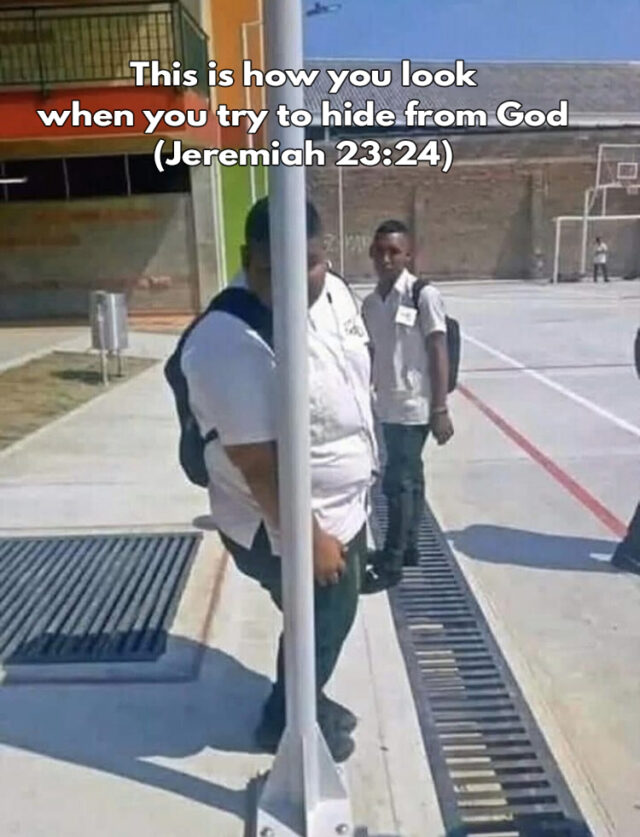
It is impossible to hide from God. This meme uses visual humor to illustrate a profound theological truth: God is omniscient and omnipresent. No matter where we go, what we attempt to conceal, or how carefully we try to cover our motives, nothing escapes His sight.
The humor highlights the futility of human attempts to avoid divine awareness. We may hide things from people. We may maintain an image. We may choose our words carefully so others do not know what is happening in our hearts. But God sees perfectly. He sees actions, intentions, desires, fears, and thoughts.
Rather than promoting terror, this truth should invite honesty. Since hiding is pointless, the appropriate response is repentance and openness before God. We do not need to pretend before the Lord. We can confess sin, ask for mercy, and seek grace to walk rightly.
This meme also reminds us of Adam and Eve in the garden. After sinning, they attempted to hide from God. But the Lord called them, exposed their condition, and later revealed the promise of redemption. The fact that God sees us should humble us, but it should also lead us to seek His mercy.
5 – Jesus: One of you will betray me…
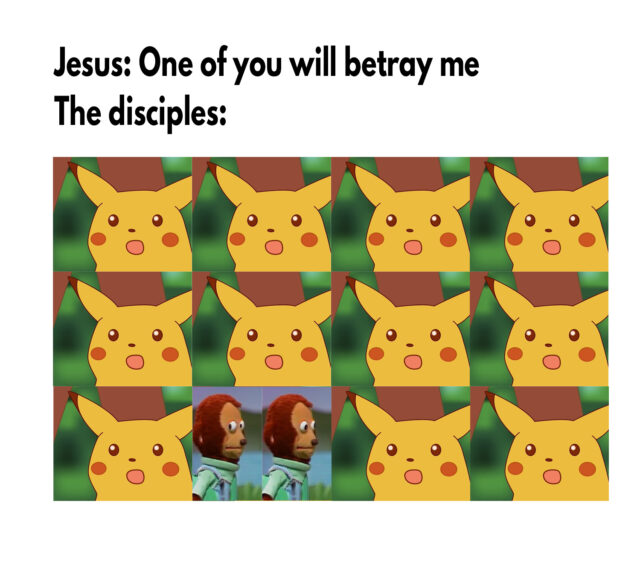
This meme creatively combines a biblical narrative with contemporary pop culture imagery. Pikachu’s surprised expression humorously represents the disciples’ reaction to Jesus’ announcement, while the contrasting expression reflects Judas’ internal realization. The meme does not mock the event itself, but highlights the human emotions present in the scene.
The betrayal of Jesus is a serious and tragic moment. Judas walked with Christ, heard His teaching, saw His works, and still betrayed Him. That reality should never be treated lightly. Yet the meme draws attention to a dramatic detail: Jesus knew exactly what was happening. He was not deceived. He knew the hearts of men.
This should lead us to reverence. Christ’s path to the cross was not accidental. He was betrayed, rejected, condemned, and crucified according to the sovereign purpose of God. Human evil was real, but God’s redemptive plan was greater.
The meme also makes us examine ourselves. It is easy to look at Judas from a distance, but every believer should ask: Are there areas where I profess love for Christ while my actions deny Him? Do I follow Him sincerely, or only when it benefits me? Humor can open the door, but the reflection must go deeper.
6 – Lord, I need You to talk to me

This meme addresses a common spiritual struggle. Many believers long for an audible, dramatic, or extraordinary revelation from God while neglecting the primary means through which He has already spoken: Scripture. The humor lies in the contrast between expectation and reality.
We sometimes say, “Lord, speak to me,” while our Bibles remain closed. We ask for direction, but ignore the wisdom already revealed in God’s Word. We ask for confirmation, but neglect obedience to clear commands. This meme gently reminds Christians that God’s Word is sufficient, living, and powerful.
Rather than dismissing the desire for guidance, the meme redirects attention to biblical truth. God does guide His people, but He does not lead them apart from His Word. The Christian who wants to hear from God must become a person of Scripture.
This is a needed message today. Many people chase signs, impressions, and emotional experiences, but do not give serious attention to the Bible. True spiritual maturity grows through faithful reading, meditation, prayer, and obedience.
Christian humor in the age of viral content
We live in a world where memes can spread faster than sermons, articles, or books. A single image can travel across platforms in minutes. This creates both opportunity and danger. The opportunity is that biblical ideas can reach many people quickly. The danger is that sacred truths can be reduced to jokes or used without reverence.
Christian creators should therefore think carefully before sharing humorous content. Does it honor God? Does it represent Scripture fairly? Does it encourage holiness, humility, or reflection? Or does it simply use Christian language for laughs?
This is especially important because digital culture often rewards exaggeration, controversy, and mockery. Christians should not imitate the worst habits of the internet. Our humor should be different. It should be clean, thoughtful, and rooted in love for God and neighbor.
This also matters when public figures, influencers, or creators use Christian themes online. Articles such as this reflection on MrBeast and his past references to Christianity remind us that digital platforms can shape how people perceive faith, sincerity, and public identity.
7 – We are all like an unclean thing
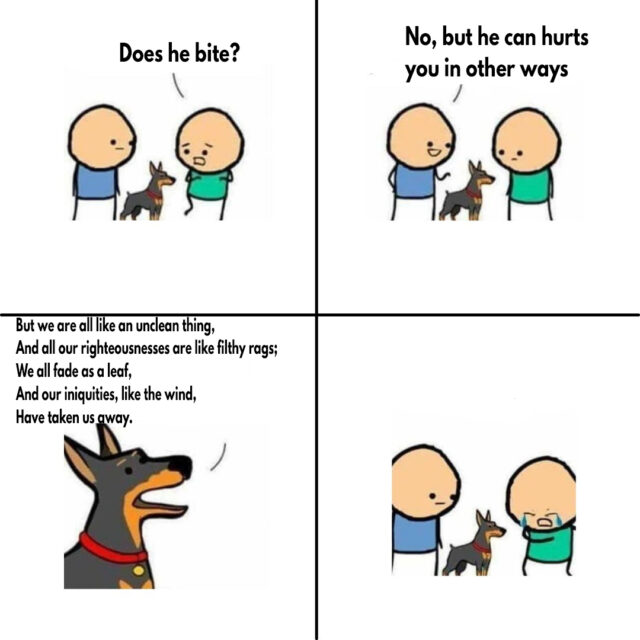
This final meme confronts human pride directly. Drawing from Isaiah 64:6–8, it reminds believers that apart from God’s grace, human righteousness is insufficient. This is not a small doctrine. It strikes at the root of self-righteousness and spiritual arrogance.
The humor does not soften the message but makes it more approachable. Sometimes a hard truth can be received more easily when presented in a memorable way. The meme reminds us that we cannot stand before God boasting in our own goodness. We need mercy. We need cleansing. We need grace.
The meme reinforces the biblical teaching that only God is holy. Human beings may compare themselves with others and feel morally superior, but before the holiness of God, all self-righteousness collapses. The Christian’s confidence is not in personal merit, but in the righteousness of Christ.
This is the kind of meme that can make someone laugh at first and then think more deeply. That is the best use of Christian humor. It opens the heart with a smile and then leaves behind a serious truth.
When laughter becomes self-examination
Healthy Christian humor should not merely make us laugh at others. It should also help us examine ourselves. If a meme only encourages mockery, pride, or division, it is not spiritually useful. But if it helps us recognize our weakness, repent, and grow, then it can serve a good purpose.
Many of these memes work because they reveal common Christian contradictions. We say we trust God, but panic easily. We say we want God to speak, but neglect Scripture. We say we love holiness, but tolerate sin. We say God sees everything, but act as though secret disobedience is hidden.
These contradictions are serious, but humor can help expose them without immediate defensiveness. A person may laugh and then realize, “That is me.” In that moment, the meme has done more than entertain. It has become a small instrument of conviction.
This does not replace the work of the Holy Spirit through the Word of God. But even a simple image can become a reminder that leads someone back to Scripture, prayer, repentance, or gratitude.
How Christians should share memes wisely
Before sharing a Christian meme, it is wise to ask a few questions. Does this honor the Lord? Does it treat Scripture respectfully? Could it confuse new believers? Does it make sin look funny in a dangerous way? Does it encourage humility or mockery? These questions can help us use humor responsibly.
Christians are called to be careful with their words, and this includes digital words. A meme may seem small, but online content can influence people. It can encourage, confuse, offend, teach, or mislead. That is why wisdom matters, even in humor.
At the same time, we do not need to reject all humor. The Christian life is serious, but it is not joyless. Believers can laugh. We can recognize our weaknesses. We can enjoy clean humor. We can use creativity to communicate truth. The important thing is that our humor remains under the lordship of Christ.
In a world full of cruel jokes, vulgar content, and meaningless entertainment, respectful Christian humor can be refreshing. It can show that laughter does not have to be sinful, and that reflection does not always have to begin with a long sermon.
Memes, teaching, and the responsibility of truth
A meme is usually brief, so it cannot explain everything. That is why we must not build doctrine from memes. They may point to truth, but they should not replace careful Bible study. A meme can introduce an idea, but Scripture must define and govern that idea.
For example, a meme about Philippians 4:13 may expose misuse of the verse, but the believer should still read the chapter and understand Paul’s teaching about contentment. A meme about hiding from God may remind us of His omniscience, but we should still study passages that reveal His holiness, justice, mercy, and presence.
The same applies to memes about grace, transformation, and Christlikeness. They can help us remember truth, but they cannot carry the full richness of biblical doctrine. The Christian must always return to the Bible.
This is why digital Christian content should be a doorway, not a destination. If a meme makes someone curious enough to open Scripture, pray, or examine the heart, then it has served a helpful role.
Christian content should lead us to worship
Whether we are talking about songs, videos, articles, apps, images, or memes, Christian content should ultimately lead us toward God. It should not merely keep us entertained. It should point us to truth, repentance, gratitude, faith, and worship.
This is why we should be selective about what we consume and share. Not every Christian-looking post is spiritually healthy. Some content uses biblical language but feeds pride. Some uses faith as branding. Some creates controversy without edification. Some makes jokes that weaken reverence.
Good Christian content, even when humorous, should leave the heart more aware of God. It should make us think more biblically, walk more humbly, and depend more deeply on grace. It should help us love the truth, not trivialize it.
This connects with the broader purpose of worship and Christian living. As this reflection on seven reasons to worship God reminds us, the believer’s life should be directed toward honoring the Lord in every area, including what we create, laugh at, and share.
Conclusion
Christian memes can be funny, but they can also be meaningful when used with wisdom. The seven memes shared in this article show that humor does not have to be irreverent. It can expose contradictions, remind us of Scripture, encourage humility, and help us reflect on our walk with God.
The important thing is discernment. We should not laugh at what dishonors God. We should not treat Scripture as a toy. We should not use Christian themes merely for attention. But we can appreciate humor that leads us to truth, self-examination, and spiritual growth.
A simple image can spark meaningful reflection. It can remind us that we often misuse verses, try to hide from God, neglect Scripture, or forget our need for grace. If that reminder leads us to repentance and faith, then even a meme has served a useful purpose.
Tell us in the comments which of these 7 has been your favorite, and do not forget to share this article with more people. May every piece of Christian content we share—whether serious, musical, visual, or humorous—honor the Lord and help others think more deeply about His Word.