“O Come All Ye Faithful” is one of those hymns that calls the heart to worship Christ with reverence and joy. Just as a hymn like “How Great Thou Art” reminds us to behold the greatness of God, this instrumental version by Hurdy Gurdy invites us to pause and adore the Lord Jesus with renewed wonder.
“O Come All Ye Faithful” has long been a classic hymn within Christian churches around the world. It is especially associated with the Christmas season, a time when believers pause to remember and celebrate the birth of our Lord Jesus Christ. Its lyrics call the faithful to approach Bethlehem with reverence, joy, and adoration, joining the heavenly chorus in praise: “O come, let us adore Him, Christ the Lord.”
This hymn has endured through centuries because it centers firmly on Jesus Christ. It is not merely a sentimental Christmas song. It is a call to worship. It invites believers to come, behold, and adore the One who was born in humility yet reigns in glory. In a world where Christmas is often reduced to decorations, gifts, and emotion, this hymn redirects the heart toward the true center of the season: the incarnation of the Son of God.
A Hymn That Calls the Faithful to Adoration
The opening invitation of the hymn is simple but powerful: “O come, all ye faithful.” It is a call addressed to those who believe, those who have been drawn by grace, those who recognize that the child born in Bethlehem is not an ordinary child. He is Christ the Lord. The hymn does not call us merely to observe a historical event, but to respond with worship.
Christian worship always begins with revelation. We do not worship an unknown God according to our imagination. We worship the God who has made Himself known. In the birth of Christ, God revealed His mercy, humility, faithfulness, and saving purpose. The eternal Son entered time. The Word became flesh. The promised Messiah came not in worldly splendor, but in lowliness.
This is why the hymn repeatedly calls us to adore Him. Adoration is more than admiration. We can admire many things, but worship belongs to God alone. To adore Christ is to recognize His divine glory, His saving mission, and His rightful place as Lord over all. The hymn helps the Church remember that the manger points toward the cross, the resurrection, and the eternal reign of Christ.
The Christmas Message at the Center of the Song
The Christmas message proclaimed in “O Come All Ye Faithful” is central to the Christian faith. God became man. The Son of God took upon Himself true humanity without ceasing to be truly God. This mystery is not a minor doctrine. It stands at the heart of the Gospel. If Christ had not come in the flesh, He could not have obeyed in our place, suffered in our nature, died for our sins, and risen as our victorious Redeemer.
The beauty of Christmas is not merely that a child was born, but that this child was Emmanuel, God with us. He came to fulfill the promises of God. He came to save His people from their sins. He came to bring light into darkness and hope into a world marked by death and rebellion. The hymn invites believers to see the glory hidden in humility.
That is why Christian Christmas hymns are so valuable. They help protect the season from becoming empty tradition. They place biblical truth on the lips of the Church. When believers sing hymns like this, they are not merely participating in seasonal music; they are confessing doctrine, remembering redemption, and declaring that Christ is worthy of worship.
A Unique Instrumental Version by Hurdy Gurdy
Today, we want to share this beloved hymn in a distinctive and less common form: an instrumental version played on the Hurdy Gurdy, shared by the YouTube channel DeeDee Tibbits. This version allows listeners to experience a familiar melody through an unfamiliar sound, offering a fresh perspective on a hymn many Christians have heard countless times.
Instrumental interpretations can be especially meaningful because they give the melody room to speak. Without lyrics, the listener is invited to remember the words internally, meditate on the meaning of the hymn, and enter a quieter posture of reflection. The absence of sung words does not remove the spiritual weight of the hymn; rather, it can help the heart listen in a different way.
The Hurdy Gurdy gives this version a sound that feels ancient, contemplative, and almost medieval. For many listeners, this instrument may be unfamiliar. Unlike the piano, guitar, violin, or saxophone, the Hurdy Gurdy is not commonly heard in modern worship settings. That makes this performance both surprising and memorable.
What Is a Hurdy Gurdy?
The Hurdy Gurdy is a string instrument that produces sound through a rosined wheel turned by a hand crank. As the wheel rotates, it rubs against the strings in a way somewhat similar to how a violin bow produces sound. The instrument usually includes strings that create both melody and a continuous drone, giving it a rich and sustained tone.
Its body can resemble a small lute or violin-like instrument, but its mechanism is very different from most string instruments people commonly know. The hand crank, wheel, strings, and keys all work together to create its unique voice. This sound can feel old, earthy, and deeply reflective, which is why it has often been associated with medieval and folk traditions in parts of Europe.
When such an instrument is used to play a Christian hymn like “O Come All Ye Faithful,” the result is striking. The melody remains familiar, but the sound world changes. The hymn feels as though it has been carried from another age, reminding us that Christian worship did not begin with our generation. Believers before us worshiped Christ, sang of His glory, and used the musical tools available to them to express reverence before God.
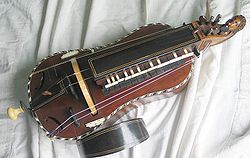
Seeing the instrument helps us better appreciate how unique it is. The crank, strings, wheel, and body come together to produce a continuous sound that can feel almost vocal in quality. This steady tone gives the hymn a reverent foundation, allowing the melody to move with a sense of solemn joy. It is not the kind of instrument one expects to hear in a typical Christmas arrangement, and that is part of its beauty.
The Value of Uncommon Instruments in Worship
One of the beautiful things about Christian music is that worship can be expressed through many instruments. The Bible itself shows us that God’s people used various instruments in praise, including stringed instruments, cymbals, trumpets, and harps. Across history, the Church has used organs, choirs, pianos, guitars, orchestras, violins, and many other musical forms to honor the Lord.
An uncommon instrument can help listeners pay fresh attention to a familiar hymn. Sometimes we hear a song so often that we stop noticing the wonder of its message. But when the melody is played in a new way, the heart may awaken again. A Hurdy Gurdy version of “O Come All Ye Faithful” can make us listen more carefully, not because the message has changed, but because the arrangement invites renewed attention.
This is similar to the way other instrumental versions of Christian songs can refresh our appreciation for worship. For example, hearing “God is here today” played on saxophone reminds us that a familiar hymn can communicate tenderness and reverence through a different musical voice. The instrument changes, but the purpose remains the same: to direct the heart toward God.
Instrumental Worship and Quiet Meditation
Instrumental worship plays a valuable role in the life of believers. While lyrics teach doctrine and allow us to confess truth together, instrumental music creates space for meditation and prayer. Without words, listeners are free to reflect personally on the meaning of the hymn and on the biblical truths it proclaims.
This does not mean instrumental worship is better than sung worship. The Church needs songs with strong biblical lyrics. Congregational singing is essential because it allows God’s people to confess truth together. But instrumental music can complement that by helping the soul slow down and contemplate what has already been sung, preached, or read in Scripture.
There are moments when words are hard to find. A believer may be tired, burdened, or simply in need of stillness. In such moments, an instrumental hymn can become a gentle companion for prayer. The melody may remind the heart of truth even when the lips are silent. The music can create a quiet atmosphere where the soul remembers God’s faithfulness.
Listening to “O Come All Ye Faithful” on Hurdy Gurdy can serve this purpose. The sound is not rushed. It does not demand a loud emotional response. Instead, it invites the listener to rest in the wonder of Christ’s coming and to consider again the meaning of the words: come and adore Him.
A Melody That Carries Centuries of Faith
One reason this hymn remains so powerful is that it has been sung by Christians across generations, cultures, and languages. It has been translated, arranged, performed, and remembered in countless settings. Congregations have sung it in large cathedrals, small chapels, homes, schools, concerts, and family gatherings. Its message has traveled far because its central truth is eternal.
This continuity matters. We live in a time when many things are quickly forgotten. Songs rise and disappear. Trends appear and fade. But hymns that are rooted in biblical truth have a way of enduring. They continue to bless the Church because they say something necessary about God, Christ, salvation, and worship.
Hearing this hymn through an older-sounding instrument like the Hurdy Gurdy strengthens that sense of continuity. It reminds us that we are not the first believers to adore Christ, and we will not be the last. The Church is a people stretched across time, united by one Lord, one faith, one Gospel, and one hope.
The Call to Come and Behold Christ
The hymn does not merely say, “Come and feel something.” It says, in essence, come and behold Christ. This is important because Christian worship is not centered on our emotions, even though emotions are involved. Worship is centered on the Lord. Our feelings may rise and fall, but Christ remains worthy.
To behold Christ is to look beyond the outward simplicity of the manger and recognize the glory of the Son of God. The world may see weakness, but faith sees the promised Savior. The world may see a child, but faith sees the King. The world may see a humble birth, but faith sees the beginning of the earthly mission that would lead to the cross and resurrection.
This is why the hymn is so deeply worshipful. It leads the singer and listener toward adoration, not merely nostalgia. Christmas memories can be beautiful, but the Christian meaning of Christmas is far greater than memory. It is the celebration of God’s redemptive action in history. Christ came because sinners needed a Savior.
The Beauty of Sacred Music Across Time
Music that draws from older instruments and styles can remind believers that worship is not bound to modern trends. Modern arrangements have their place, and many contemporary songs have been a blessing to the Church. But there is something grounding about hearing sacred music expressed through instruments that echo the past.
It reminds us that Christian worship is part of a much larger story. We do not gather to invent a new faith every generation. We receive the faith once delivered to the saints. We sing old truths in new circumstances. We use different instruments, languages, and arrangements, but the message remains centered on the same Lord Jesus Christ.
This is why musical variety can be healthy when it remains faithful to truth. A hymn can be sung by a choir, played on guitar, performed by an orchestra, or interpreted on an uncommon instrument. The form may change, but reverence should remain. The goal is not novelty for its own sake, but worship that turns the heart toward God.
This same principle can be seen in other unusual instrumental performances, such as when listeners are invited to hear “Hallelujah” performed on an Array Mbira. An uncommon instrument can make the listener pause, listen more attentively, and appreciate how musical creativity can be used to point toward beauty, reverence, and reflection.
Worship That Belongs to Christ Alone
The final aim of every Christian hymn should be the glory of Christ. Instruments, voices, arrangements, and performances are valuable only when they serve that purpose. A beautiful sound is not enough if it does not lead the heart toward God. True worship must be more than artistic expression; it must be rooted in faith, truth, and reverence.
“O Come All Ye Faithful” keeps this focus clear. The hymn does not exalt the singers. It does not celebrate human talent. It does not turn attention toward the performance itself. It calls everyone to adore Christ the Lord. This is a necessary reminder for every generation of believers, especially in an age where music can easily become entertainment rather than worship.
Christian musicians should use their gifts with humility. Listeners should receive music with discernment. Churches should choose songs that direct attention to God rather than to human personality. When this happens, music becomes a servant of worship rather than a distraction from it.
This instrumental version by Hurdy Gurdy can help us remember that even without lyrics, the melody still carries the call of the hymn: come, behold, and adore Christ. The sound may be unusual, but the invitation is familiar. The instrument may be uncommon, but the Lord being honored is the same yesterday, today, and forever.
The Emotional Power of Instrumental Christian Music
Instrumental Christian music often reaches the heart in a unique way. Since there are no sung words, the listener may begin to remember the lyrics internally or pray silently while listening. The melody becomes a path for reflection. The heart fills in the meaning because the hymn is already known and loved.
This is especially true with hymns connected to major Christian themes such as Christmas, the cross, resurrection, grace, or the beauty of Jesus. A melody can awaken memories of worship services, family gatherings, church choirs, or personal moments of prayer. In this way, instrumental music can become deeply personal while still pointing to universal truths.
There are also moments when instrumental worship reveals the emotional depth of a song in a fresh way. The rise and fall of the melody, the texture of the instrument, and the pacing of the performance can all help the listener feel the weight of the hymn’s message. This is why many people are moved by instrumental worship even when no words are spoken.
A powerful example of this can be seen when a violinist broke down in tears while performing “Yeshua”. Such moments remind us that music offered to God can stir deep affection, reverence, gratitude, and awe. The instrument becomes a voice of devotion.
A Fresh Way to Hear a Familiar Hymn
Many believers have heard “O Come All Ye Faithful” so many times that they may no longer stop to think about its words. This is one of the dangers of familiarity. A song can be so well known that we sing it without reflection. But when the same hymn is played in a surprising way, it can help us listen again.
The Hurdy Gurdy gives the melody a distinct character. Its sustained tone and ancient quality make the hymn feel contemplative. It does not sound like a typical Christmas arrangement heard in stores, concerts, or church services. Instead, it feels like a quiet invitation to step away from noise and remember the wonder of Christ’s birth.
This is especially valuable during the Christmas season. Many people become busy, distracted, and overwhelmed. There are plans, responsibilities, purchases, gatherings, and expectations. Yet the hymn calls us back to the center: come and adore Him. The Hurdy Gurdy version gives us an opportunity to slow down and receive that call with renewed attention.
Conclusion
“O Come All Ye Faithful” remains one of the most beloved hymns of the Christian faith because it proclaims a timeless invitation: come and adore Christ the Lord. Its message is simple, biblical, and deeply worshipful. It reminds us that Christmas is not primarily about sentiment, tradition, or celebration in itself, but about the glory of the Son of God who came to redeem His people.
This instrumental version by Hurdy Gurdy offers a fresh and beautiful way to hear the hymn. The instrument’s ancient and distinctive sound gives the melody a contemplative quality, helping listeners slow down and reflect on the meaning of Christ’s incarnation. It shows us that even uncommon instruments can be used to point the heart toward God.
May this version encourage you to listen carefully, worship sincerely, and remember the greatness of the Savior. Whether this is your first time hearing the Hurdy Gurdy or you were already familiar with it, let the melody lead your thoughts toward reverence, gratitude, and joy in Christ.
May all our worship, in every season and through every expression, be directed to Him who is worthy of all praise. Let this instrumental version serve as a reminder that the call to “come and adore Him” continues to echo across generations, cultures, and musical traditions.