“O Come All Ye Faithful” has long been a classic hymn within Christian churches around the world. It is a song especially associated with the Christmas season, a time when believers pause to remember and celebrate the birth of our Lord Jesus Christ. Its lyrics call all people to approach Bethlehem with reverence and joy, joining the heavenly chorus in worship: “Sing with joy, heavenly choirs, let the heavens resound with your adoration, glory to Christ, glory in the highest.” These words remind us that worship is not merely a human response, but a cosmic act in which heaven and earth unite to glorify the Son of God.
Throughout centuries, this hymn has endured because it centers firmly on Christ. It does not focus on sentimentality alone, but on adoration. The call to worship is clear and direct: believers are invited to come, to behold, and to adore Christ the Lord. In a world where distractions abound, hymns like this redirect the heart toward what truly matters. They remind the Church that all worship, whether sung softly or proclaimed boldly, must ultimately be directed to Jesus Christ.
“O Come All Ye Faithful” has been translated into many languages and adapted into countless musical arrangements. Choirs, orchestras, congregations, and soloists have all embraced it as a centerpiece of Christmas worship. Each rendition carries the same core message while offering a unique musical expression. This variety reflects the richness of Christian worship across cultures and generations.
Today, we want to share this beloved hymn in a distinctive and less common form: an instrumental by Hurdy Gurdy, shared by the YouTube channel “DeeDee Tibbits.” This version invites listeners to experience a familiar melody through an unfamiliar sound, offering a fresh perspective on a well-known song. Instrumental interpretations often encourage deeper reflection, allowing the melody itself to speak without words.
You may not have previously heard of a musical instrument called the Hurdy Gurdy. Unlike instruments such as the piano, guitar, or violin, the Hurdy Gurdy is far less common in modern worship settings. If you were already familiar with this instrument, feel free to share that in the comments. For many listeners, encountering the Hurdy Gurdy for the first time is both surprising and intriguing.
In summary, the Hurdy Gurdy is a string instrument that produces sound through a rosined wheel turned by a hand crank. As the wheel rotates, it rubs against the strings in a way similar to how a violin bow works. The instrument’s body somewhat resembles that of a violin or small lute, yet its mechanism gives it a continuous, droning quality that sets it apart from other string instruments.
Historically, the Hurdy Gurdy has been used in various musical traditions across Europe, particularly in medieval and folk music. Its sound can feel ancient, earthy, and contemplative. When applied to a Christian hymn like “O Come All Ye Faithful,” it creates a sense of timelessness, connecting modern listeners with older musical traditions that once filled churches, streets, and gatherings with praise.
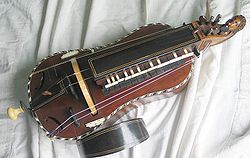
Seeing the instrument helps one better appreciate how unique it is. The hand crank, strings, and wheel work together to produce a sustained tone that can feel almost vocal in quality. This continuous sound lends itself particularly well to hymns, which often benefit from a steady and reverent musical foundation.
Instrumental worship plays a valuable role in the life of the Church. While lyrics teach doctrine and declare truth, instrumental music creates space for meditation and prayer. Without words, listeners are free to reflect personally on the meaning of the hymn and on the truths it proclaims. In this sense, instrumental worship does not replace sung worship, but complements it.
Listening to “O Come All Ye Faithful” played on the Hurdy Gurdy can evoke a sense of awe and quiet joy. The melody, already rich with meaning, is carried by an instrument whose sound feels both ancient and reverent. It gently invites the listener to slow down, to listen attentively, and to consider the significance of Christ’s incarnation.
The Christmas message proclaimed in this hymn is central to the Christian faith. God became man, entering history in humility to redeem humanity. This truth has been sung, preached, and celebrated for centuries, and each generation finds new ways to express it. Whether through traditional choirs or uncommon instruments like the Hurdy Gurdy, the message remains unchanged.
Music that draws from older instruments and styles can also remind believers that worship is not bound to trends. While modern arrangements have their place, there is something deeply grounding about hearing sacred music expressed through instruments that echo the past. It reinforces the continuity of faith across time and reminds us that believers before us worshiped the same Christ.
So that you can enjoy the beautiful sound of this string instrument, we leave you below “O Come All Ye Faithful” in an instrumental arrangement by Hurdy Gurdy. We encourage you to listen carefully and allow the melody to guide your thoughts toward gratitude, reverence, and joy in Christ.
As you listen, consider how worship takes many forms and how each form can direct the heart toward God. Whether through familiar hymns sung by a congregation or through uncommon instrumental interpretations, the goal remains the same: to glorify our Lord Jesus Christ.
May all our worship, in every season and through every expression, be directed to Him who is worthy of all praise. Let this instrumental version serve as a reminder that the call to “come and adore Him” continues to echo across generations, cultures, and musical traditions.